
History
A chronology of northern-coast lighthouse development
From early hazard lights to preserved landmarks, these five phases trace how the coast's beacons were built, worked, and protected.
-
1812–1845 · First Coastal Beacons
Timber and stone towers were raised at dangerous headlands, giving mariners their first regular night guidance along the northern coast.
-
1846–1889 · Expansion of the Light Network
Growing trade routes brought additional stations, keeper dwellings, and standardized lenses, linking major ports with smaller fishing settlements.
-
1890–1939 · Operational Peak Years
At full operation, lighthouse crews maintained weather logs, fog signals, and lamp systems that supported dense commercial and passenger traffic.
-
1940–1978 · Automation and Transition
Electric lamps, radio aids, and remote controls gradually reduced staffed service, shifting many towers from daily workplaces to monitored sites.
-
1979–Today · Preservation and Public Memory
Heritage trusts and local communities stabilized surviving towers, opening them to research, education, and map-led exploration of maritime history.
Archive photography
Shoreline studies in light, stone, and weather
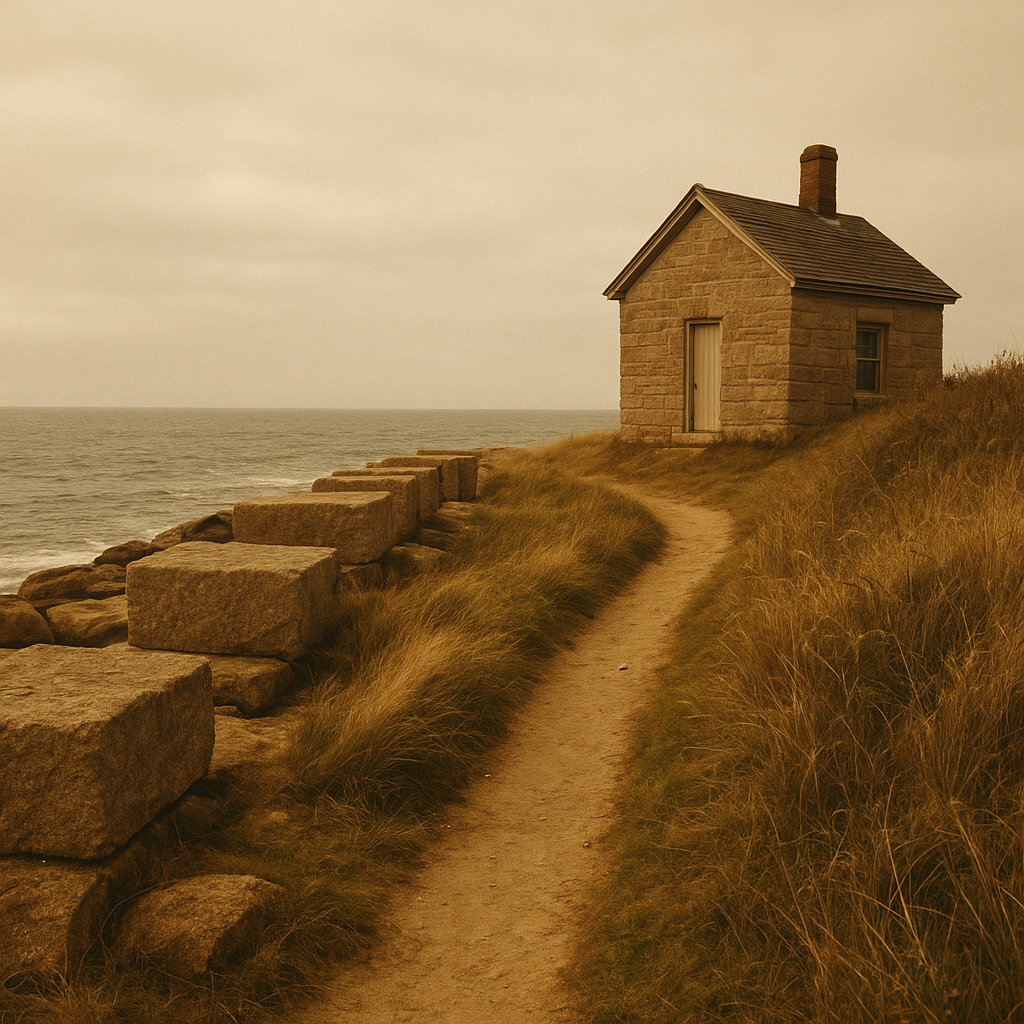
A brief visual sequence from preserved coastal towers and their surrounding structures, presented with concise historical framing.